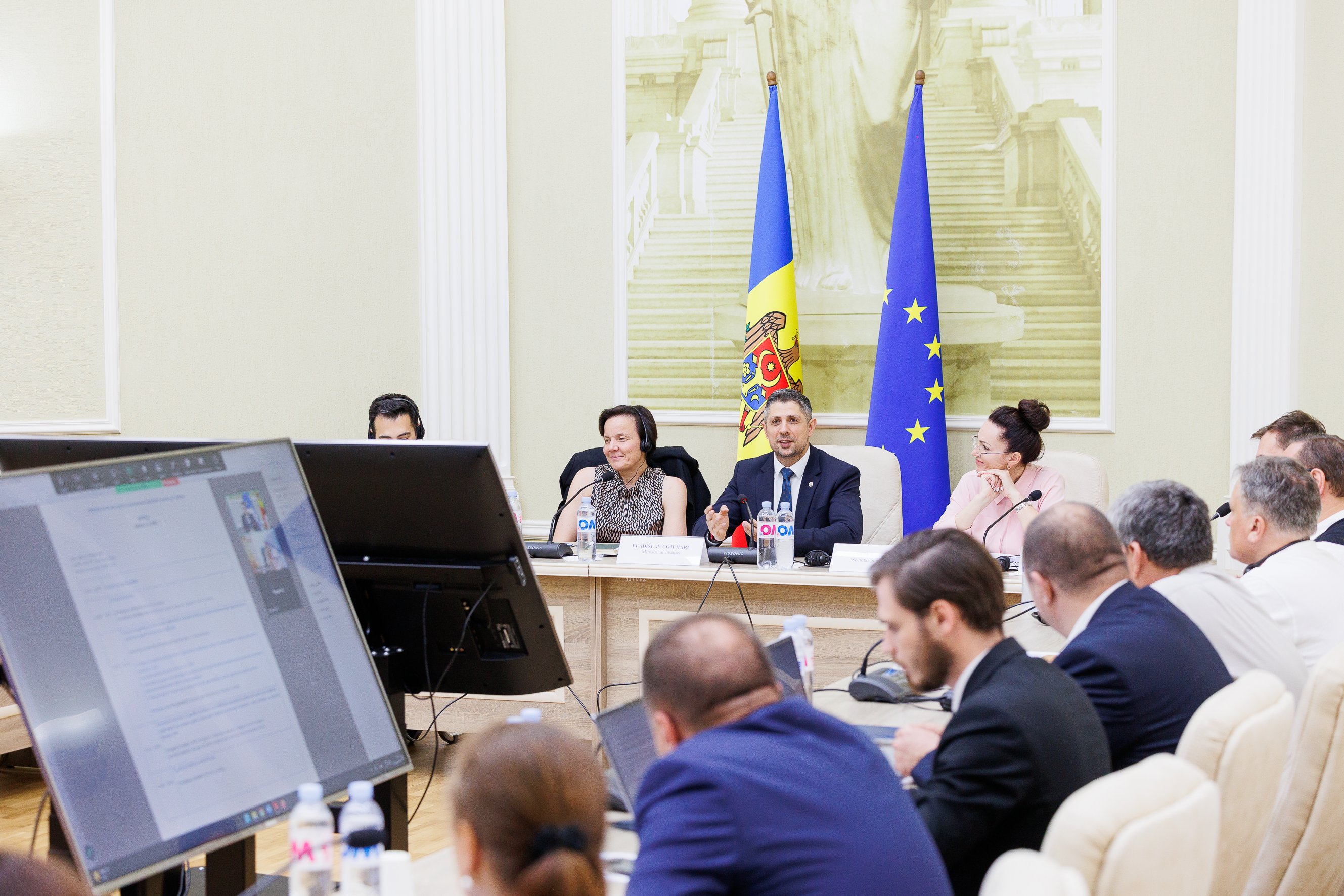
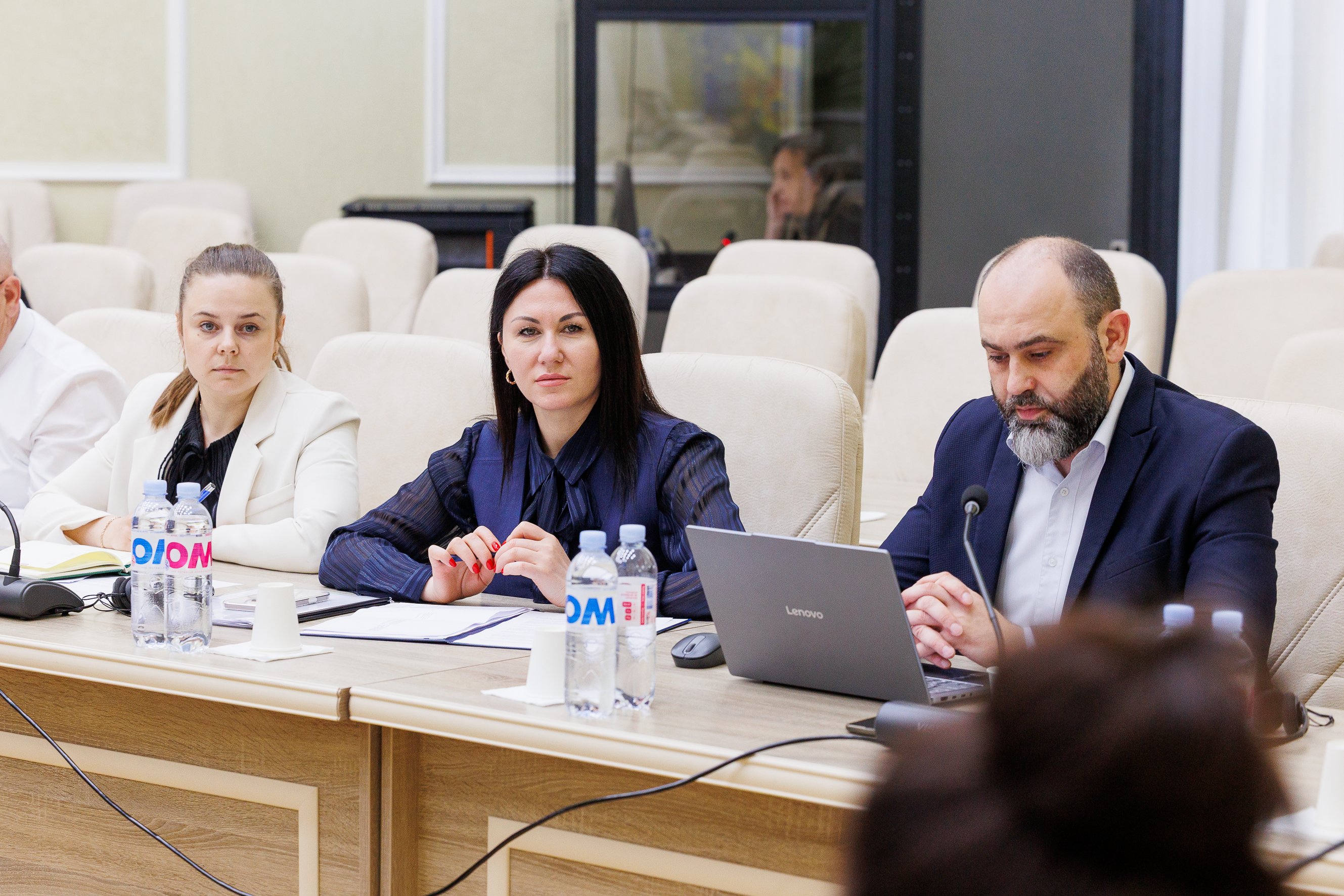
June 22, 2026, Chisinau – The progress made in the digitalization process of the justice sector, undertaken within the Reform Agenda related to the 2025–2027 Growth Plan, the Rule of Law Roadmap and other institutional commitments, were presented at the meeting of the Council for the Coordination of the Digitalization of the Justice Sector.
The Ministry of Justice, subordinate institutions and other institutions in the justice sector presented the status of implementation of digitalization actions and projects under their responsibility, the activities planned for the second semester of 2026, as well as the needs for normative, technical and inter-institutional support for advancing digital projects.
During the meeting, the Minister of Justice, Vladislav Cojuhari, mentioned that, with the opening of accession negotiations related to Cluster 1 "Fundamental Values", the European Commission pays particular attention to the efficiency of the justice system, access to justice, the quality of services and the use of digital solutions that contribute to improving the functioning of institutions in the sector.In this context, digitalization represents a strategic objective of the justice sector and an important component of the European integration process.
"The Ministry of Justice is in the process of developing the new Program for the development of the justice sector for the period 2027–2031. Digital transformation is one of the dimensions on which we will focus. We have set out to develop e-Justice services, ensure the interoperability of the information systems of institutions in the sector, digitize administrative processes and strengthen cybersecurity," the minister said.
The minister emphasized that the systems developed and modernized to date, as well as the digital tools that facilitate access to information, process management, and remote participation in court hearings, represent an important basis for continuing the process of digital transformation of justice.
The meeting also presented the project "Strengthening the efficiency and accessibility of the justice system through digital transformation", which will be implemented by the Estonian Digital Governance Academy, with the financial support of the European Union.
Stela Braniște, Deputy Secretary General of the Ministry of Justice, thanked the European Union and the EU Delegation in Chisinau for the support provided and for launching the new project, whose objectives are aligned with the needs and commitments assumed through the Reform Agenda related to the 2025–2027 Growth Plan and the Rule of Law Roadmap.
The project will support the development of interoperability of existing information systems, the expansion of electronic data exchange between institutions, the automation of administrative processes, the development of digital services and the strengthening of institutional capacities necessary for the digital transformation of the justice sector.
The Council for the Coordination of the Digitalization of the Justice Sector represents a platform for dialogue and cooperation between institutions in the sector, established by the Ministry of Justice, which has the role of ensuring better coordination of digital solutions required for the justice sector.